WHY COFFEE HAS A FRAGRANCE?
Hi Sombra People, who here loves the aroma of coffee? Did you know that coffee has a variety of aromas? The captivating aroma of coffee comes from hundreds of volatile compounds—which easily evaporate—formed through chemical reactions—primarily the Maillard reaction and caramelization—when coffee beans are roasted. Aromatic compounds are the chemical substances that give coffee its distinctive taste and aroma. These compounds are crucial in coffee production because they contribute to the beverage’s sensory symphony, leaving a lasting impression on our sense of taste and other senses.
Coffee aroma plays a crucial role in determining coffee quality; it serves as the coffee’s defining characteristic and also influences the perceptions of coffee enthusiasts. Researchers have revealed that there are over 800 volatile compounds that create the aroma of coffee, consisting of furans, pyrazines (aromatic, nutty), aldehydes (fruity, sweet), acids (acetic acid), ketones, alcohols, phenols, lactones, anhydrides, and sulfur. The combination of these compounds produces flavor profiles (cupping notes) such as nutty, chocolate, fruity, floral, spicy, and earthy.
The roasting process transforms the chemical components in green coffee beans into complex aromas. The longer the beans are roasted, the more the aroma profile shifts from bright/fruity (light) to rich/bold (dark). Arabica often has a richer profile of volatile compounds compared to Robusta, particularly in terms of aldehydes. The higher the levels of volatile and non-volatile compounds in the coffee, the better the aroma, flavor, and overall quality of the coffee product—and the more it is preferred by consumers.
Aldehydes are formed during the coffee roasting process through chemical reactions such as the Maillard reaction, caramelization, and pyrolysis. Aldehydes are volatile compounds that contribute fruity, sweet, nutty, malty, green, grassy, woody, and spicy aromas to coffee. Specific aldehydes that contribute to the aroma include benzaldehyde (chocolate-like sweetness) and phenylacetaldehyde (floral/honey notes). Arabica coffee tends to have higher levels of aldehydes compared to other varieties, resulting in a more complex aroma profile.
The formation of phenolic compounds in coffee aroma is part of the complex chemical reactions that occur during the roasting process of coffee beans. Phenols contribute to coffee’s distinctive aroma profile, often imparting sweet, slightly smoky, or tar-like aromatic notes. The primary phenolic compound in green coffee beans is chlorogenic acid (CGA). During roasting, CGA breaks down into simpler phenolic compounds, which then contribute to the aroma and flavor. Phenolic compounds in coffee act as important natural antioxidants.
Pyrrole and its derivatives, such as 1-methyl-1H-pyrrole, are volatile compounds formed during the roasting of coffee beans. These compounds contribute to coffee’s distinctive aroma profile, often imparting notes of roasted, nutty, spicy, and chocolatey aromas.
The formation of esters in coffee aroma is a complex chemical process that occurs primarily during the roasting and fermentation stages. Esters play a key role in creating the fruity, floral, and sweet aroma profiles in coffee. Lipids or fatty acids in coffee beans break down and bond to form esters that impart distinctive aromas. Ester compounds help distinguish the quality of coffee aromas, particularly in Arabica varieties, which have a more complex flavor profile.
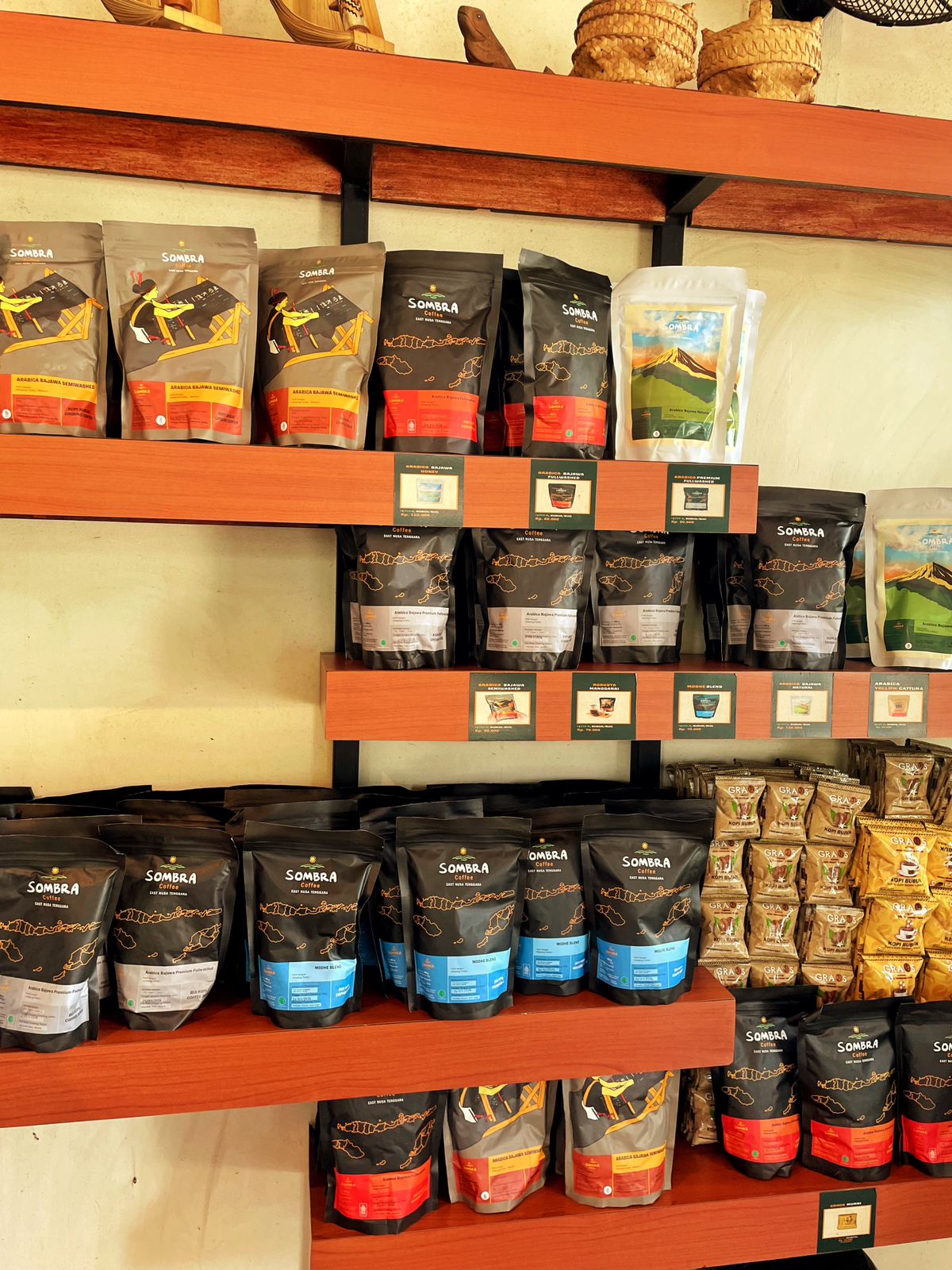
If you’re already familiar with the origins of Aroma Kopi, go ahead and buy some and enjoy authentic coffee from East Nusa Tenggara.
Link to get your favorite coffee from Sombra Coffee:
https://id.shp.ee/TM75Nqphttps://www.tiktok.com/@graoscoffee.sombracoffee?_r=1&_t=ZS-93GokkZtvWh
